
Search and rescue
Fly the search pattern; the crew spots the lost party
A search flies a square spiral over the area where a party is lost, while the crew watch for their orange tent and smoke (a red flare at night). There’s nothing to tap, and you needn’t watch: once the pattern and a last turn in over them are flown, they’re found. Passing close on the way finds them sooner. Then the plane heads straight home.
Searches pay ×2. No jets, and nothing with more than 60 seats.
| Found them | +50% |
|---|---|
| Picked up from the sea | +35% |
| Survival kit dropped | +10% |
| Searched, not found | −40% |
In a helicopter
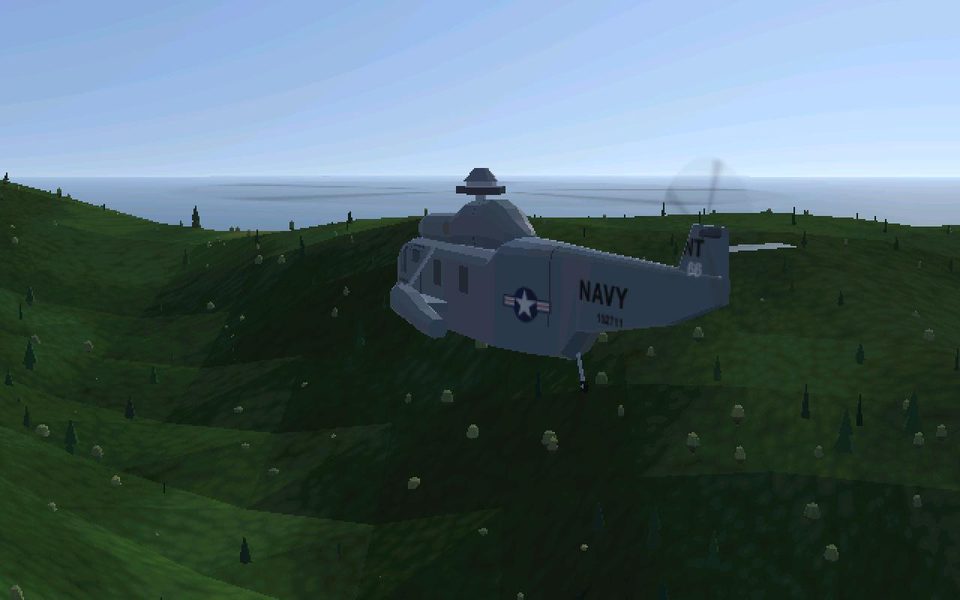
A helicopter searches low, about 1,000 ft over the ground, and ends its pattern over them. It hovers while the rescuer goes down on the hoist, winches them both up and flies home. A light piston helicopter like the Hummingbird has no hoist: at sea it drops a survival kit from the hover, and on land it passes their position on.
At sea
Some searches are at sea: kayakers or divers off a sight on the coast, or a life raft, a fishing boat, a yacht or a ditched pilot 20 to 60 nm offshore. The board says when they were last seen, how rough the sea is and which way they’re drifting, and the search is flown at 1,000 ft round where they’ll have drifted to. By day the crew look for green dye in the water (orange smoke from a boat), at night for a strobe (a red flare).
- A floatplane or flying boat lands beside them and flies them home: by day, in a calm or moderate sea and under 16 kt of wind.
- A helicopter winches them up.
- Any other plane drops them a survival kit from a low pass.
- A rougher sea, and a longer time in the water, pay more.
Finding a party earns extra reputation and the Guardian Angel award, and counts on World → First Responders.
See also
- Scenic toursCircle a sight and come home
- ReputationIn each kind of work, paying more
- First RespondersFires, rescues and medevacs, ranked