
Stork
Twin-rotor heavy lifter: thirty seats, or ten tonnes slung on a line beneath it
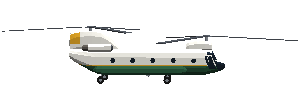
| Speed | 150 kt | |
|---|---|---|
| Range | 390 nm | |
| Seats | 30 | |
| Cargo | 9t |
A twin-rotor heavy lifter: two big three-blade rotors, one at each end turning opposite ways, and no tail rotor.
Built to lift, though it seats 30: containers, steel beams, cabins and excavators slung under it out to sites, platforms and ships, set down there without landing.
With a load on the line it flies slowly: about 60 kt with a container or a cabin, which swing at speed, up to 85 kt with fuel drums.
Good for
- Work out to helipads and home again: hospitals, city rooftops, remote camps, oil platforms and ships
- Scenic tours, landing tours at glaciers, canyons and craters, and heli-skiing in winter
- Search and rescue: it goes in and winches the party up itself
- Sling loads up to 11 t on its hook, out to remote sites, oil platforms, ships and rooftops, and building materials for projects nearby
- Fire bombing with a bucket on its hook, filled at a dip tank by the fire
- Freight: 9 t of cargo room, enough for a heavy lift week’s loads (3 t and up)
Not for surveys, crop dusting or banner towing: helicopters don’t fly those.
- Stork liveriesBig Timber, Helitak, Co: Cheatline, Co: Sweep and Co: Two-Tone
Numbers
| Engine | Twin turbine |
|---|---|
| Seats | 30 + pilot |
| Cargo | 9 t |
| Cruise speed | 150 kt true airspeed (TAS) |
| Cruises at | 2,500 ft |
| Ceiling | 20,000 ft |
| Range | 390 nm |
| Runway it needs | None |
| Gear | Fixed |
| Rotors · length | 18.29 m across · 30.1 m |
| Fuel burn | 450 gal/h at $5.50 |
| Maintenance | $30 a nm flown |
Owning one
| Price | $800,000 |
|---|---|
| License | Heavy-Lift Helicopter Rating (LIFT) |
| Sells back for | $440,000 where it’s parked, $280,000 from anywhere else |
| Respray | $160,000 (free in the Pilots Club) |
| Jump | 5 jumps |
| Upgrades | Night vision, $160,000 to fit |
- Upgrades and floatsFloats for seaplane bases, airtanker kits
Trip times
Real minutes from takeoff to parked, on average, flown direct or low and scenic, and what fuel and maintenance cost.
| Trip | Direct | Low | Costs |
|---|---|---|---|
| 25 nm | 14m | 14m | $1,311 |
| 50 nm | 24m | 26m | $2,412 |
| 100 nm | 44m | 50m | $4,613 |
| 200 nm | 1h 24m | 1h 37m | $9,015 |
See also
- All aircraftEvery type compared
- Buying and sellingThe shop, stock, selling back
- Licenses and ratingsCheckrides and what they open